Moving an NDIS provider from spreadsheets to operating software
A practical migration checklist for NDIS providers moving participant records, rosters, billing evidence, service agreements, worker records, compliance follow-up, and source-file review out of spreadsheets.
7
evidence areas to map before import

Migration is an evidence-trail decision.
Start with the records that explain delivered supports
The NDIS record-keeping page says providers need complete and accurate records of supports delivered to participants, including invoices, support logs, rosters, case notes, and service agreements. Source: NDIS record-keeping requirements.
That makes the first migration question simple: can the new system explain what was delivered, to whom, when, by which worker or team, under which support context, and why the claim or invoice is reasonable?
Effica's NDIS rostering software, NDIS billing software, and NDIS compliance software pages frame that same operating chain: records, delivery evidence, approval, claims, and follow-up should stay connected instead of being retyped between files.
Effica NDIS rostering software
Review the public product page for roster evidence, timesheets, payroll handoff, and claim readiness.
NDIS record keeping
Official NDIS provider guidance on support delivery records and claim evidence.

A bulk upload is not a migration strategy.
Do not import spreadsheet mess as clean data
If the spreadsheet has duplicate participants, inconsistent support labels, stale plan dates, missing worker IDs, unowned incident follow-up, and hand-edited invoice numbers, importing everything at once can preserve the same operational risk under a cleaner interface.
Set a human-review rule before bulk import: which fields are mandatory, which gaps can remain in draft, which rows affect billing or safety, and which historical rows should be archived as evidence rather than turned into active work.
For rosters with overnight or allowance complexity, keep the migration close to the existing Effica article on SCHADS sleepover roster changes. Sleepover, active overnight, public-holiday, allowance, and worker-evidence context should not be flattened into a generic hours column without review.
Classify source files before they become live operating records.
Add a Source Data Hub readiness pass
A good migration pass does not only ask whether a row can be imported. It asks whether each source file is import-ready, needs an owner review, belongs in archive-only evidence, should be de-identified before handling, or should not move into active workflow at all.
The OAIC guidance on securing personal information says organisations should take reasonable steps to protect personal information from misuse, interference, loss, unauthorised access, modification, or disclosure. Source: OAIC securing personal information.
For an implementation team, that means the review workspace should show the original source, the proposed destination workflow, the exception owner, the reason for any blocker, and the go-live decision before imported data affects rosters, service agreements, billing, or compliance follow-up. Effica's NDIS software migration page is the product path for that implementation conversation.
Effica NDIS software migration
Review the public implementation path for moving from spreadsheets into connected workflows.
OAIC securing personal information
Official Australian privacy guidance for protecting personal information during system and process changes.
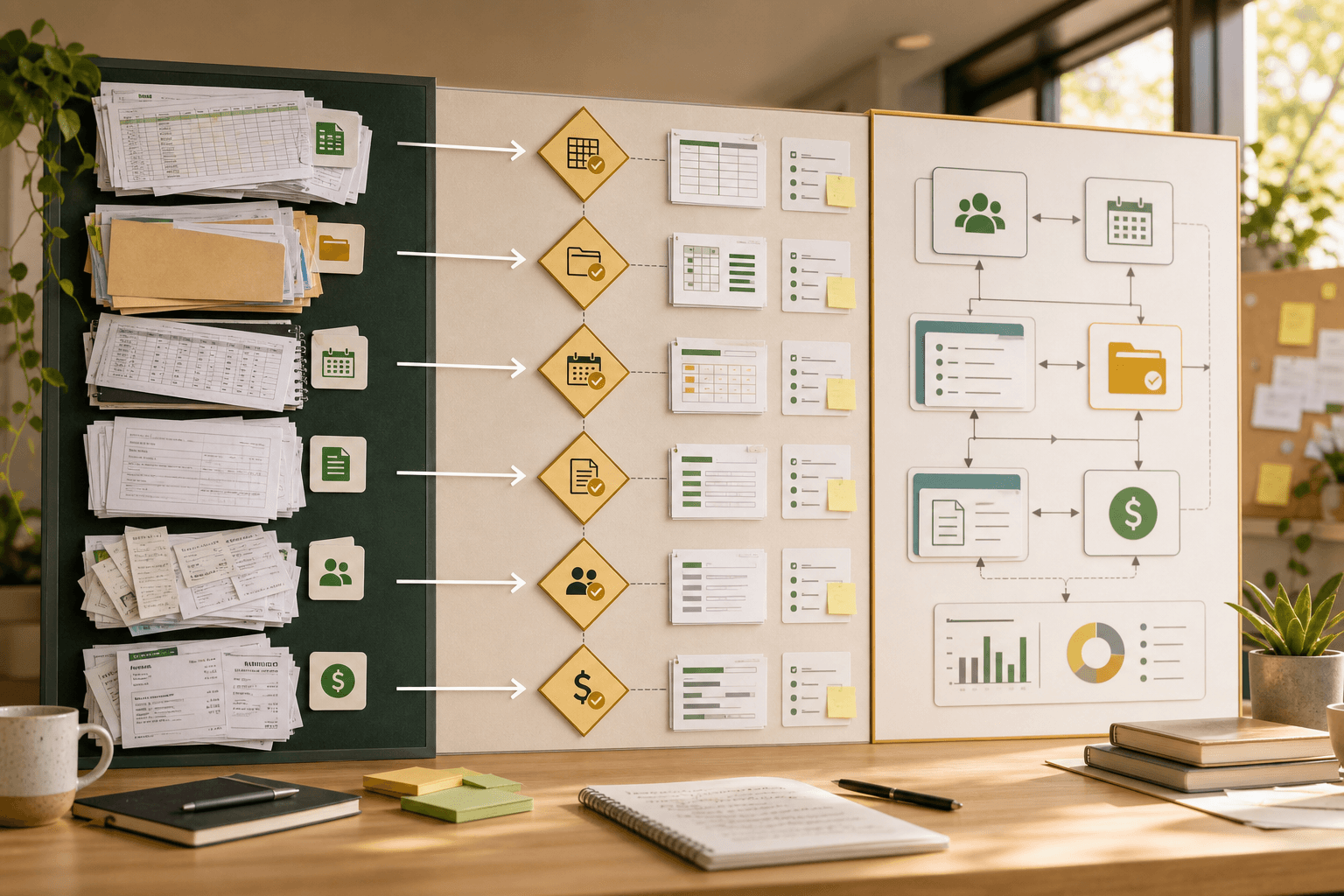
Documents need to sit near daily operations.
Bring service agreements and support boundaries across early
NDIS guidance describes a service agreement as a signed agreement that helps a participant and provider share expectations about what supports will be delivered and how. Source: NDIS service agreement guidance.
That matters during migration because service agreements and schedules of support often sit in document folders while roster spreadsheets and invoice sheets carry the daily work.
In the target system, agreement context should be close enough to the roster and billing workflow that staff can see when a support line, participant plan date, funding boundary, or service pattern needs review. The software should help operators find the gap; it should not pretend to be the source of official NDIS rules.
Workforce gaps affect the roster, not only HR.
Treat worker records and training as operational data
The NDIS Commission core module includes governance, risk, information management, incident management, human resource management, and continuity of supports responsibilities for providers. Source: NDIS Commission core module.
If worker data lives in one spreadsheet, training evidence in another, and rostering eligibility in an inbox, migration should not just create a prettier staff table. It should help answer which workers are eligible for which supports, which checks are missing, and which exceptions need manager sign-off.
Effica positions this as workflow support: surface worker and participant context before decisions are made, while keeping provider managers responsible for compliance, clinical, and employment decisions.
Connect the facts without merging the decisions.
Keep payroll, billing, and roster evidence connected
Fair Work says employers covered by relevant Commonwealth workplace laws must make and keep accurate and complete employee records, including time worked and wages paid, and issue pay slips. Source: Fair Work record keeping and pay slips.
NDIS payment request guidance explains single and bulk payment request pathways and notes that rejected claims show a status and error message explaining what needs to be fixed before resubmission. Source: NDIS payment request guidance.
Migration should connect the underlying shift evidence while keeping review decisions separate: rosters explain what was planned, mobile notes explain what happened, timesheet approval informs payroll review, billing review informs claims, and reconciliation explains what was paid.
The related Effica article on NDIS billing software and Xero reconciliation goes deeper on payment results, rejected lines, and accounting reconciliation without turning Effica into the source of NDIS or payroll rules.
Prove one service line end to end.
Use a staged cutover, not a big-bang switch
A safer cutover proves one bounded scope before the old spreadsheet becomes read-only. Pick one branch, service line, or SIL house; import sample participants, workers, service agreements, roster rows, and invoice examples; then validate known exceptions with the operators who own the work.
Only after that should the team run a parallel roster and approval cycle, review the first payroll handoff, prepare a first billing batch, reconcile the payment trail, freeze the old spreadsheet for that scope, and repeat for the next scope with a shorter checklist.
The migration win is not simply importing the spreadsheet. The win is that a provider can explain a support from agreement to roster to delivery evidence to approval to claim review without five people reconciling five different files.
Book a migration workflow review
Map the evidence trail first, then decide which Effica workflows should move next.
Effica homepage
See the participant, rostering, finance, compliance, workforce, and implementation surfaces this article depends on.
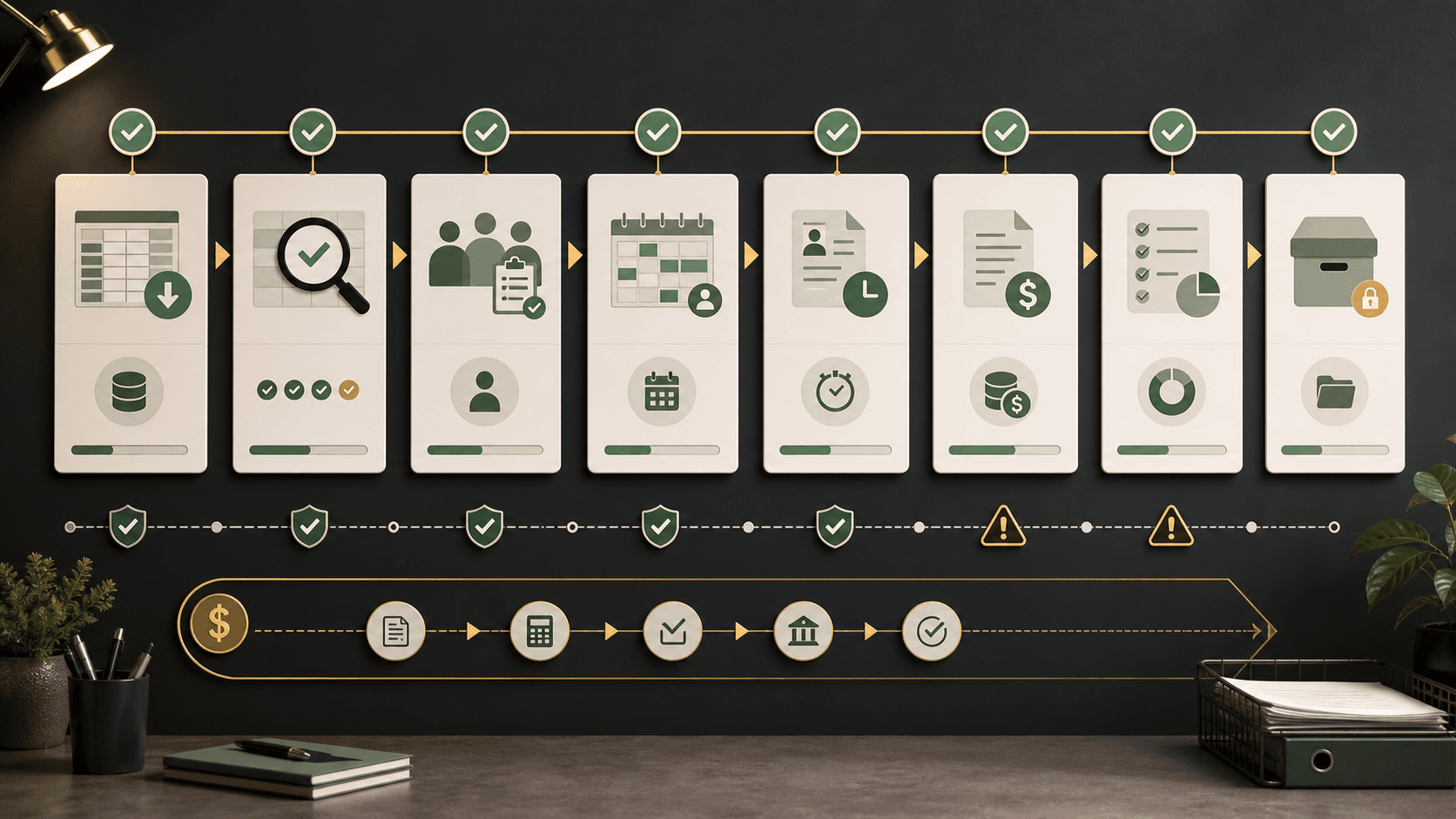
The migration win is not 'we imported the spreadsheet.' The win is a provider can explain a support from agreement to roster to delivery evidence to approval to claim review without reconciling five different files.
Continue with Effica
If your NDIS provider is still running rosters, billing, compliance follow-up, and worker gaps through spreadsheets, book an Effica workflow review. We will map the evidence trail first, then show which operating workflows should move next.
Book a migration workflow reviewRelated Effica pages
NDIS rostering software
Review the roster, timesheet, payroll handoff, and claim-readiness workflow this migration article supports.
View pageNDIS billing software
See how approved service evidence flows into claims, payment outcomes, and Xero reconciliation.
View pageNDIS compliance software
Review the incident, complaint, evidence, and follow-up trail that spreadsheet migration must protect.
View pageNDIS software migration
Review the product path for mapping spreadsheets, source files, operating records, and implementation checkpoints.
View pageNDIS billing and Xero article
Read the related article on rejected claims, payment results, and reconciliation workflow.
View pageContinue reading
More from the Effica blog
NDIS CRM software buyer guide
NDIS CRM software: choosing a system for participant relationships
A practical buyer guide to participant records, consent, agreements and service handoffs in an NDIS provider CRM.
Read articleMy provider relationships
NDIS my provider relationships: software checks for onboarding and claims
A practical workflow for keeping participant communication, my provider relationship requests, service agreements, role dates and claim review connected.
Read articleReferral intake and onboarding
NDIS referral management software: intake to service start
A practical workflow for moving an NDIS referral through consent, suitability, support planning, agreements and a reviewable service-start handoff.
Read article