SIL mandatory registration: apply before 1 October 2026
Existing unregistered SIL providers must apply before 1 October 2026 to keep delivering during assessment. How to track the pathway and related operational evidence.
1 Oct
2026: apply before this date if the existing unregistered SIL provider pathway applies

The 1 October date applies to a specific transition pathway; check which pathway fits your provider.
Check your SIL registration pathway and deadline first
The NDIS Quality and Safeguards Commission says the SIL mandatory-registration transition began on 1 July 2026. For an existing unregistered NDIS provider, including a sole trader, already delivering SIL, its specific transition pathway says to submit a valid application for registration group 0138 and any other relevant groups before 1 October 2026 to continue delivering SIL during the application. Other providers should check the Commission's pathway for their own registration status and services.
For SIL providers, the practical software question is not just whether a registration task exists. It is whether the team can connect transition-pathway decisions to the house roster, worker evidence, participant communication, service agreement context, incident follow-up, and finance records a reviewer may ask about later.
Effica's SIL rostering software path is the primary product page for this topic because SIL registration work quickly touches roster-of-care context, shared supports, sleepovers, worker readiness, and service delivery evidence.
Transition decisions should be traceable back to the official pathway and the records they affect.
Map the SIL transition pathway before changing rosters
The Commission's mandatory-registration page for SIL providers explains the SIL-specific transition information. Providers should use that official source to understand the pathway, timing, and what applies to their own services.
Operationally, a transition pathway creates work across more than one screen. Managers need a simple way to see which houses, participants, workers, service agreements, complaints, incidents, and evidence folders are in scope for the next review step.
Effica should be treated as workflow support, not the rules source. The useful pattern is to capture the decision, link the supporting record, and show which live operational records were reviewed before a roster, agreement, or finance process moved forward.
SIL roster-of-care article
Read how SIL roster-of-care context, shared supports, sleepovers, and finance boundaries fit together.
Service agreement software
Connect service agreement context to SIL roster and support-delivery decisions.
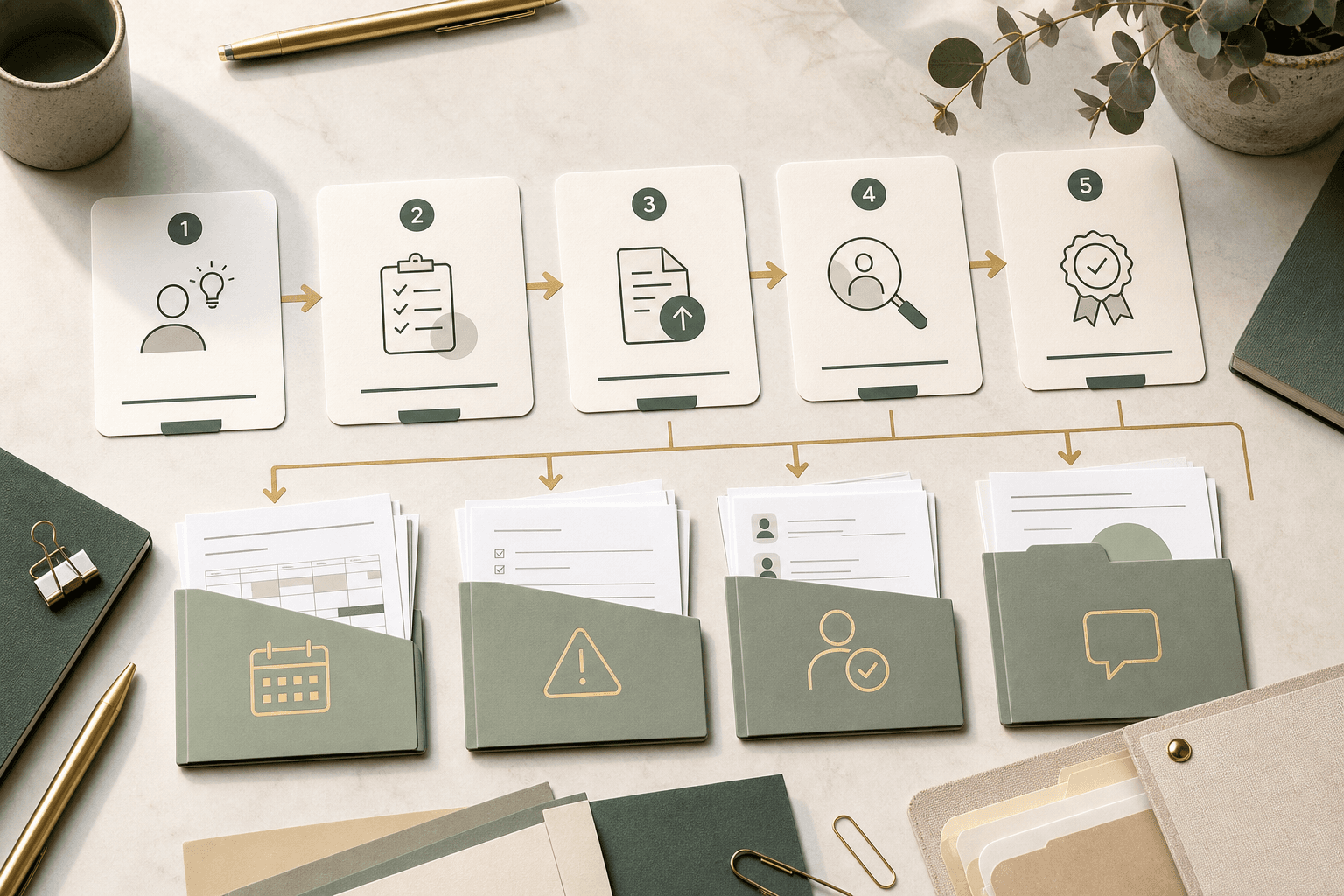
Audit preparation is weakest when records live far away from the work they explain.
Keep Practice Standards evidence close to service delivery
The Commission describes the NDIS Practice Standards as setting out the quality standards registered providers must meet to provide supports and services. Software cannot replace those standards, but it can make the evidence trail easier to assemble and review.
For SIL, that evidence trail usually cuts across day-to-day operations: house rosters, handover notes, incident follow-up, worker screening and training, participant communication, restrictive-practice context where relevant, service agreements, and billing boundaries.
Buyers should ask whether a system can keep evidence connected to the operational record that created it. A document vault alone helps storage; a reviewable workflow helps a manager explain what happened, when, and why.
The records should connect, but they should not collapse into the same approval.
Do not confuse audit evidence with payroll or claiming proof
The Commission's audit guidance distinguishes verification and certification audit pathways for registration applications. Source: NDIS Commission types of audits.
That audit pathway is different from payroll evidence and different again from NDIS claiming evidence. A SIL roster can support all three reviews, but each review asks a different question: was the service delivered safely, was the worker paid correctly, and was the claim supported by the right agreement and delivery evidence?
Effica's role is to keep those boundaries readable. SIL house records can inform NDIS billing software and payroll review without pretending that a claim-ready record is the same as a registration-ready evidence set.
Billing software
Review the finance workflow for claims, payment results, and reconciliation context.
Payroll export article
Keep worker payroll export checks separate from participant claiming and finance reconciliation.

The buying questions should test evidence quality, not just task-list coverage.
What to ask before choosing SIL registration software
Ask whether the product can show a current view of each SIL house, the participants and workers in scope, open compliance tasks, incident and complaint follow-up, expiring worker evidence, service agreement context, and records still waiting for manager review.
Ask whether the system can explain why a record was marked complete. For registration preparation, a tick without source evidence, responsible owner, timestamp, or linked operational context may still leave the provider rebuilding the story manually.
Ask how the system protects sensitive records. Registration preparation can involve participant, worker, incident, and service-delivery context, so the product's privacy and security posture matters before the first audit pack is assembled.
The official Commission guidance remains the source of truth. Effica keeps the work reviewable.
How Effica supports the review without replacing official rules
Effica helps providers keep SIL operations, worker readiness, participant context, compliance tasks, incidents, service agreements, and finance boundaries close enough to review together.
It does not decide registration obligations, certify compliance, replace auditors, or provide legal advice. Provider leadership still needs to read the official Commission guidance, decide what applies to their services, and seek professional advice where needed.
The practical goal is fewer blind spots: one place to see the work in scope, the evidence attached, the owner responsible, and the next review step before important SIL operating decisions move forward.
Effica supports the workflow around SIL registration preparation, roster evidence, worker readiness, and audit review. The NDIS Commission remains the official source for registration obligations and Practice Standards.
Continue with Effica
See how SIL roster, worker, participant, compliance, and finance records can stay reviewable as registration preparation moves forward.
Review Effica SIL workflowsRelated Effica pages
SIL rostering software
Review the product path for SIL house rosters, shared supports, and roster-of-care context.
View pageNDIS compliance software
Keep compliance tasks, evidence, incidents, and audit review connected.
View pageNDIS provider software
See the wider operating platform for participant, workforce, rostering, compliance, and finance teams.
View pageService agreement software
Keep support agreements connected to SIL roster and service-delivery review.
View pageContinue reading
More from the Effica blog
NDIS CRM software buyer guide
NDIS CRM software: choosing a system for participant relationships
A practical buyer guide to participant records, consent, agreements and service handoffs in an NDIS provider CRM.
Read articleMy provider relationships
NDIS my provider relationships: software checks for onboarding and claims
A practical workflow for keeping participant communication, my provider relationship requests, service agreements, role dates and claim review connected.
Read articleReferral intake and onboarding
NDIS referral management software: intake to service start
A practical workflow for moving an NDIS referral through consent, suitability, support planning, agreements and a reviewable service-start handoff.
Read article