AI-assisted NDIS provider operations: useful patterns and guardrails
A practical guide for NDIS providers evaluating AI-assisted operations software, with human review, privacy, audit trails, and workflow guardrails kept in view.
6
guardrails to review before AI touches operational work

Providers are searching for assistance with boundaries.
The buyer question is not just what AI can do
Search interest around AI NDIS provider software is already mixing productivity claims with risk questions. For providers, the useful question is narrower: can an assistant reduce admin friction while keeping human review, privacy, audit evidence, and provider obligations visible?
Effica's NDIS provider software page is the right product path for this topic because AI only makes sense when it is connected to rostering, participant records, billing context, documents, incidents, and compliance workflows instead of floating beside them.
The practical buying lens is simple: use AI to summarise, surface gaps, draft next steps, and route work for review. Do not treat it as the source of NDIS rules, payroll advice, funding decisions, or final compliance judgment.
AI should shorten review, not remove review.
Keep human review in the loop
The NDIS Commission's AI transparency statement says its own current use of AI does not put members of the public in a position where they directly interact with, or are significantly impacted by, AI without a human intermediary or intervention. Source: NDIS Commission AI transparency statement.
That is a useful operating pattern for providers too. If an assistant drafts an incident summary, highlights a missing document, or proposes a roster risk, the workflow should still show who reviewed it, what source record was checked, what changed, and who approved the next action.
Behaviour support is a stricter example. The NDIS Commission's position statement says it does not endorse or approve AI tools for developing or reviewing behaviour support plans, while noting providers must comply with legal obligations if they use AI. Source: NDIS Commission AI behaviour support position statement.
NDIS Practice Standards
Official NDIS Commission standards that sit above provider workflow tools.
Compliance workflow article
Read how evidence trails, incidents, complaints, and follow-up tasks should stay reviewable.
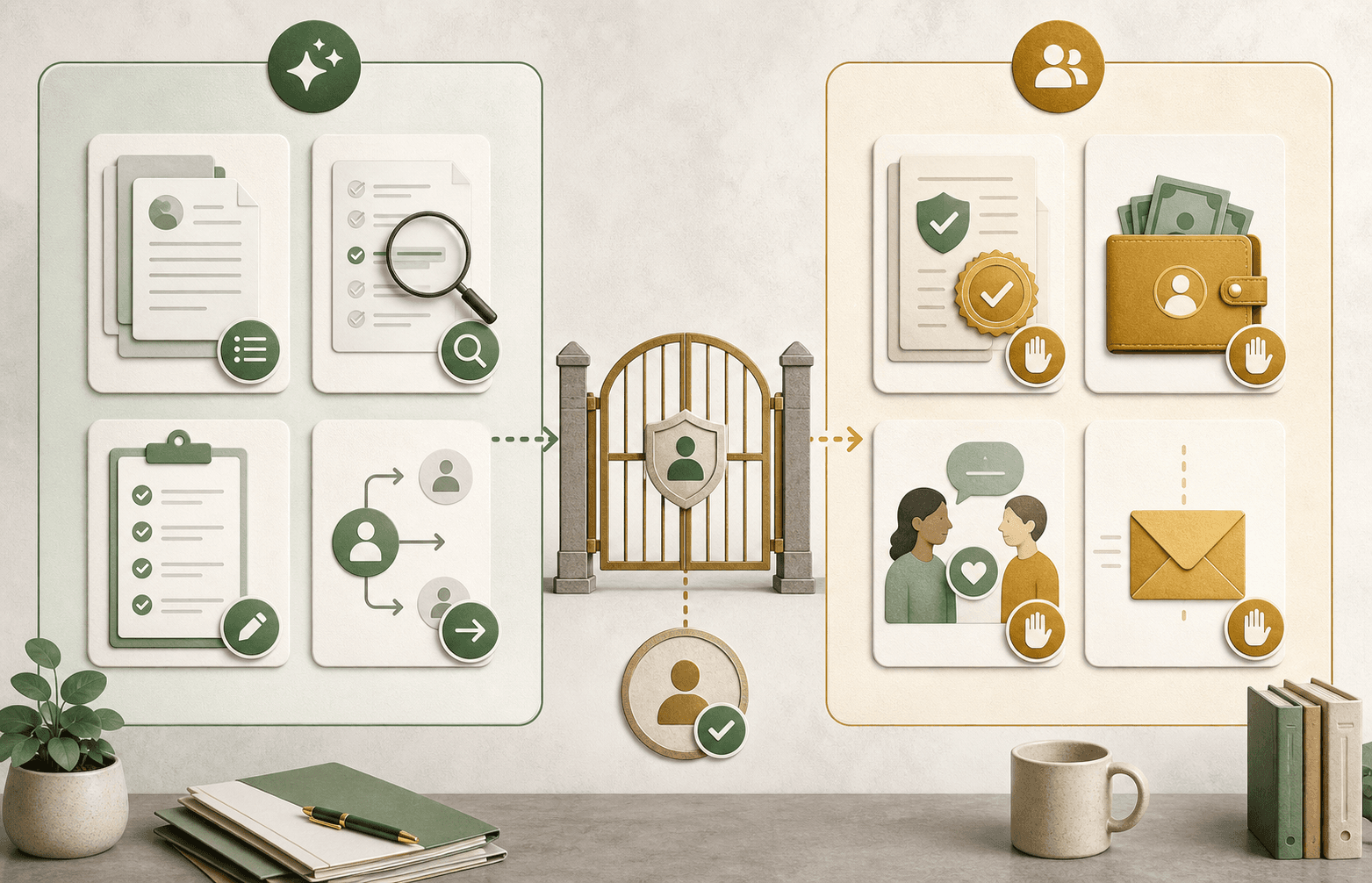
Prompt minimisation matters in NDIS operations.
Protect personal information before it reaches an assistant
NDIS provider workflows can include sensitive participant, worker, incident, funding, roster, and document context. Before any assistant sees that context, software should minimise what is sent, keep tenant and role scope tight, avoid unnecessary identifiers, and record the source records behind the answer.
The OAIC guidance on commercially available AI products says the Privacy Act applies to AI uses involving personal information and addresses publicly available AI tools as well as commercial products. Source: OAIC guidance on commercially available AI products.
For buyer due diligence, ask whether the software can explain what context was used, whether prompts exclude unrelated records, whether attachments and summaries inherit the same access rules as the source workflow, and whether deleted or archived records are handled deliberately.
Effica security
Review Effica's public security posture for provider operations.
Effica privacy
Read Effica's public privacy policy for handling personal information.
Effica subprocessors
See the public list of subprocessors used to operate Effica.
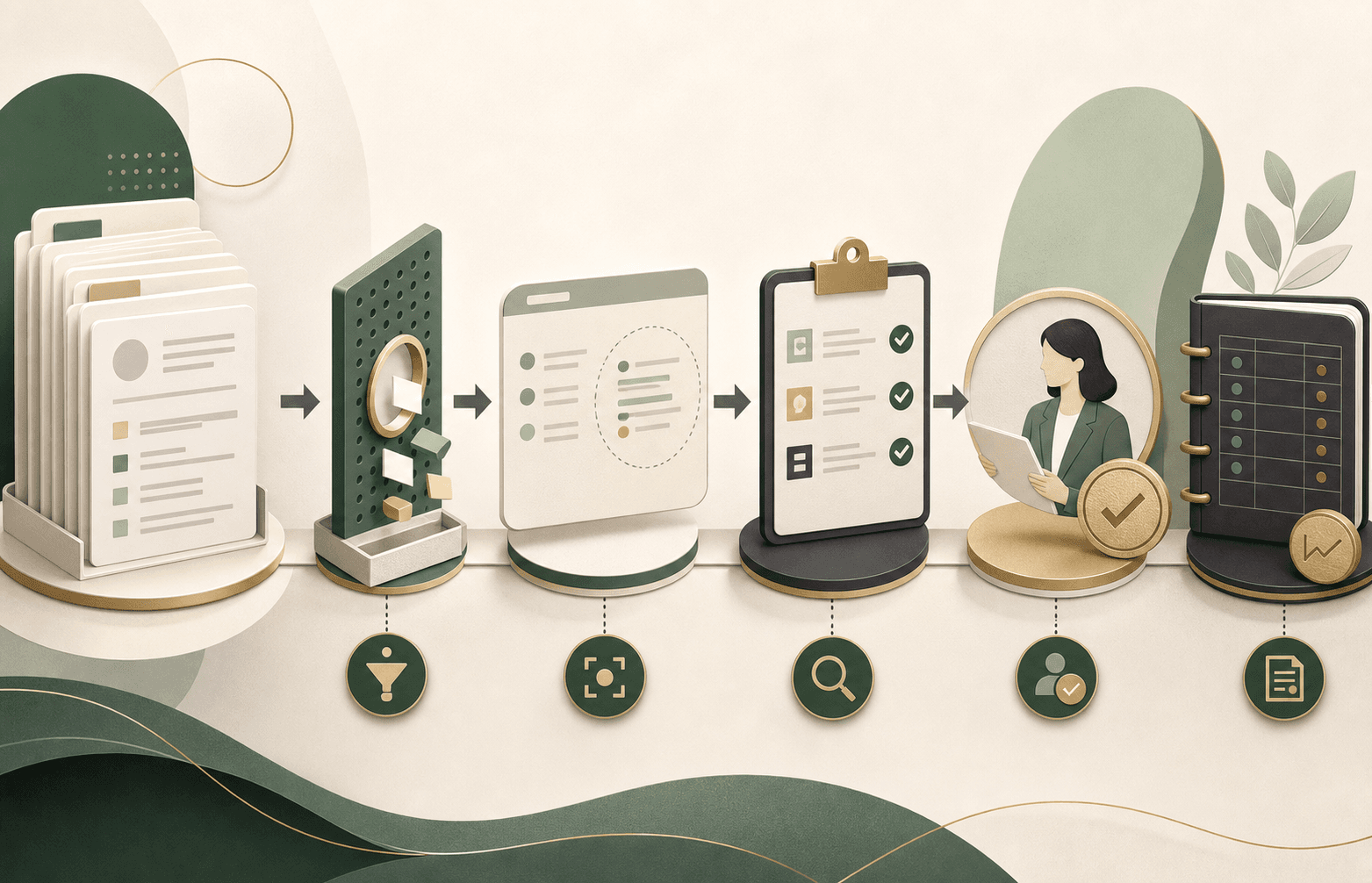
The safest patterns are narrow and reviewable.
Use AI for bounded support, not unsupported decisions
Useful assistant patterns in NDIS operations are bounded. They include summarising a participant handover, finding missing billing context, drafting a checklist from official source links, identifying a roster that needs manager review, or turning a long note into a clearer draft for a person to edit.
Riskier patterns start when software lets AI approve payroll, decide a participant's funding position, send external communications without confirmation, rewrite clinical or behaviour support documents, or apply operational changes without a review trail.
The Australian Government's Voluntary AI Safety Standard frames guardrails as a foundation for safe and responsible AI use. Source: Voluntary AI Safety Standard.
A demo should prove controls, not just clever answers.
What to ask before buying AI-enabled NDIS software
Ask where the assistant gets its context, how it handles missing source evidence, what it refuses to do, how prompts are scoped, whether staff can see source citations, how manager approval works, and whether actions leave a durable audit trail.
Then test the uncomfortable cases: ask about a participant who has incomplete funding context, a rostered shift that conflicts with payroll rules, an incident record with missing follow-up, and an external message that should require confirmation before sending.
Good software should fail closed. It should say when it lacks enough information, point the team to the right source workflow, and keep official NDIS, SCHADS, privacy, and provider policy sources separate from assistant-generated wording.
Funding alerts article
Review why funding risk signals should lead to human workflow review rather than unsupported claims.
Effica support
Contact Effica if you want to review a specific provider workflow.

Workflow support, not a replacement for provider responsibility.
How Effica frames Effie
Effie is designed as a workflow support layer inside Effica. The useful job is to summarise context, surface gaps, route work to the right place, and prepare reviewable drafts across connected records.
Effie is not the source of official NDIS rules, payroll advice, legal advice, clinical decisions, or provider compliance certification. Those responsibilities stay with provider teams and the official sources they rely on.
For providers comparing AI-enabled platforms, that distinction is the buying signal. The strongest assistant is not the one that sounds most certain; it is the one that keeps source evidence, privacy, permissions, review, and audit trails visible while people stay in control.
Treat AI as a review accelerator. If a workflow cannot show source records, human approval, privacy scope, and audit trail, it is not ready for high-trust NDIS operations.
Continue with Effica
See how Effica connects provider operations and frames Effie as assistance for teams to review.
Review Effica's AI-supported NDIS workflowRelated Effica pages
NDIS provider software
Explore the connected provider operating system that this AI workflow article supports.
View pageEffie in action
See how Effica positions Effie as operational assistance with team control.
View pageSecurity
Review Effica's public security posture for sensitive provider operations.
View pagePrivacy
Read how Effica describes privacy handling for personal information.
View pageCompliance software article
Go deeper on audit evidence, incidents, complaints, and follow-up trails.
View pageContinue reading
More from the Effica blog
NDIS CRM software buyer guide
NDIS CRM software: choosing a system for participant relationships
A practical buyer guide to participant records, consent, agreements and service handoffs in an NDIS provider CRM.
Read articleMy provider relationships
NDIS my provider relationships: software checks for onboarding and claims
A practical workflow for keeping participant communication, my provider relationship requests, service agreements, role dates and claim review connected.
Read articleReferral intake and onboarding
NDIS referral management software: intake to service start
A practical workflow for moving an NDIS referral through consent, suitability, support planning, agreements and a reviewable service-start handoff.
Read article